
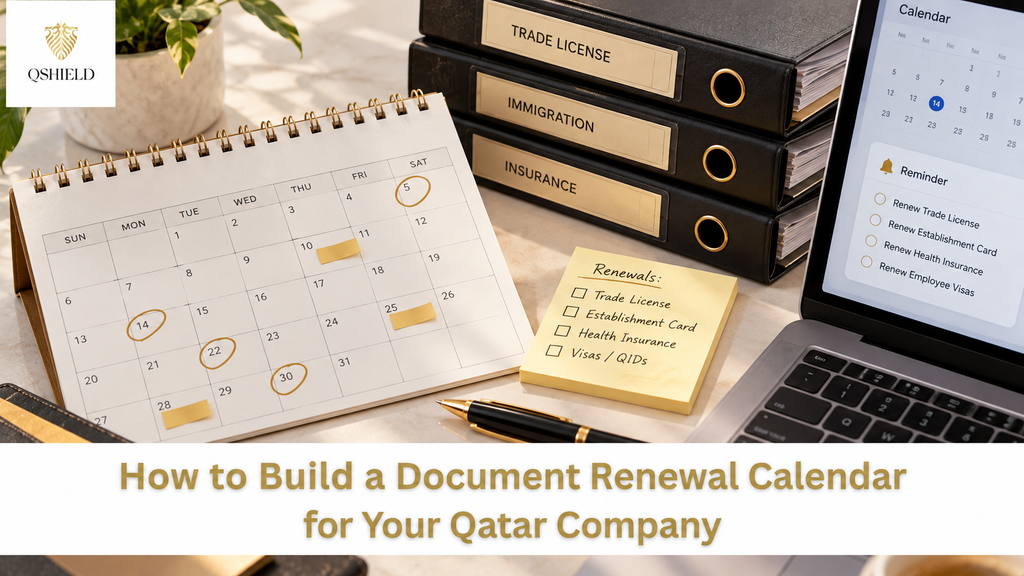
Operating a company involves tracking multiple regulatory obligations, from commercial registrations and municipal permits to employee residencies and tax filings. When renewal dates are scattered across different government portals or tracked manually in spreadsheets, deadlines can easily slip through the cracks. Missing a single renewal window can result in government fines, frozen bank accounts, or administrative delays that stall daily operations.
How can your administrative team stay ahead of these moving targets? Building a centralized, proactive document renewal calendar protects your company from compliance risks and administrative stress. Let’s examine how to structure an effective tracking system tailored to the regulatory environment.
Why Centralized Tracking Matters
Many companies rely on reactive tracking, scrambling to renew a trade licence or employee residency only after receiving an alert that it has expired. This approach creates unnecessary operational friction.
The Cost of Administrative Lapses
Regulatory compliance in Qatar spans several distinct authorities depending on your corporate structure. Mainland businesses coordinate primarily through the Ministry of Commerce and Industry (MOCI) and the Ministry of Interior (MOI), while entities within the Qatar Financial Centre (QFC) or Qatar Free Zones follow distinct internal regulatory frameworks.
When critical documents expire, the consequences cascade quickly:
- Expired commercial registrations can freeze corporate bank accounts and block vendor payments.
- Lapsed employee residency permits risk government financial penalties and travel restrictions.
- Late company tax filings or municipal licence renewals can delay the certificates you need to submit bids for contracts.
Mapping Your Core Corporate Assets
To build a reliable renewal calendar, you must first categorize every mandatory company document. Grouping items by their issuing authority and renewal cycle keeps your tracking system organized.
1. Corporate Legal and Licensing Documents
Your foundational business permissions form the backbone of your calendar:
- Commercial Registration (CR): Note that MOCI allows businesses to select renewal periods ranging from one to five years, meaning your CR does not automatically renew annually.
- Commercial Permits and Signage Licences: These must be valid for the same period as your Commercial Registration (CR).
- Computer Cards (Establishment Cards): Managed via MOI portals, these authorize your company to apply for visas and interact electronically with government systems.
2. Regulatory and Tax Filings
Corporate tax obligations require strict adherence to annual reporting cycles through the General Tax Authority (GTA) or QFC tax portal, depending on your jurisdiction. Your calendar should log the fiscal year-end and statutory filing deadlines well in advance.
3. Employee Visas and Labour Contracts
With personnel documentation representing the highest volume of recurring renewals, tracking individual Qatar IDs (QIDs), work contracts, and passport validity dates prevents sudden staffing disruptions.
Step-by-Step Guide to Building Your Renewal Calendar
Constructing an actionable calendar requires more than simply logging expiration dates. It requires building a buffer for internal processing and document gathering.
Establish a Tiered Alert System
An expiration date is not your action date. Set automated reminders at strategic intervals before each deadline:
- 90 Days Prior: Review major corporate licences and initiate audits for any required third-party approvals or document notarizations.
- 60 Days Prior: Start collecting the financial statements needed for tax filing or arranging any medical checks required for residence permit renewal.
- 30 Days Prior: Submit renewal applications through official channels such as the MOCI Single Window portal or the GTA Dhareeba system.
Assign Clear Internal Ownership
A calendar is only as effective as the team managing it. Designate specific administrative or PRO (Public Relations Officer) team members as owners for each document category. Clear accountability ensures that pending renewals are tracked actively rather than assumed to be someone else’s responsibility.
Common Pitfalls to Avoid
Even with a calendar in place, certain administrative oversights can disrupt the renewal process.
Assuming All Licences Share the Same Expiry Date
A common error is assuming that subsidiary branch licences or specialized activity approvals share the exact expiration date of the main commercial registration. Always verify individual branch CRs and sub-permits separately, as their renewal timelines can differ.
Neglecting Portal Access and Authentication
Many digital government portals require active national authentication credentials or digital tokens linked to authorized signatories. Set calendar reminders before digital signing certificates or authorised user accounts expire so you can renew them and avoid losing access when submitting urgent applications.
Your Practical Renewal Calendar Checklist
- Audit Existing Inventory: Compile a master list of all active commercial registrations, municipal permits, establishment cards, and tax registrations.
- Verify Official Expiry Dates: Check the dates on your paper documents against those shown on official government portals, such as MOCI Single Window or GTA’s Dhareeba platform.
- Input Tiered Reminders: Program calendar notifications at 90, 60, and 30 days prior to each expiration date.
- Collate Supporting Requirements: Identify any mandatory pre-approvals, financial audits, or lease updates required before submitting renewals.
- Assign Task Owners: Designate clear responsibility to internal administrators or corporate service partners for each renewal batch.
How QShield Can Support Your Compliance Management
Maintaining an airtight document renewal schedule requires consistent oversight, deep regulatory familiarity, and proactive coordination across multiple government portals.
At QShield, we provide corporate compliance, visa management, and government liaison services in Qatar. Whether you need to audit your existing document portfolio, streamline your regulatory calendar, or manage end-to-end renewals across mainland, QFC, or free zone jurisdictions, our team provides reliable, hands-on support.
Are you looking to streamline your corporate compliance and secure your renewal schedule? Contact QShield today to discuss your regulatory requirements.