
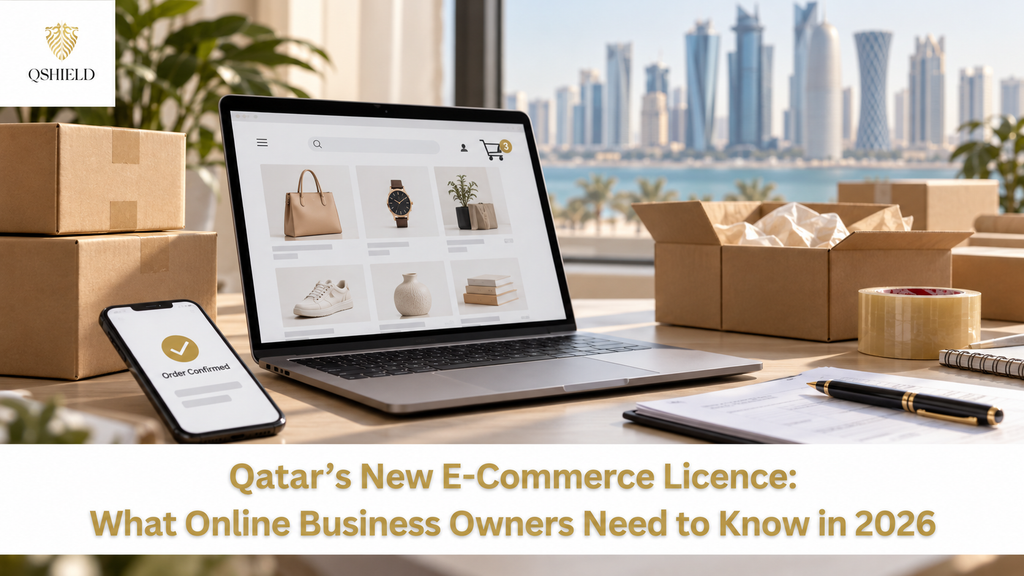
Launching a digital storefront or expanding an existing retail venture online used to present a regulatory gray area for companies in Qatar. Traditional business registration rules were designed for companies with physical shops or offices. Businesses selling only through websites, apps, or social media often had to take extra steps to meet licensing requirements.
The regulatory landscape changed with the implementation of the Ministry of Commerce and Industry (MOCI) Ministerial Decision No. 25 of 2026. This framework formally establishes a dedicated e-commerce licence for digital commercial activities that do not require physical premises.
What does this regulatory shift mean for retail brands, digital service providers, and trading companies operating in Qatar? Let’s examine the core requirements, compliance obligations, and practical steps needed to secure your digital operations.
Understanding the Framework Behind the 2026 E-Commerce Licence
The primary objective of the e-commerce licensing framework is to bring digital trade into clear regulatory alignment while lowering barriers to entry for online ventures.
A Standalone Permit for Digital Operations
Under the updated guidelines, an e-commerce licence is a distinct commercial permit that authorizes trading through an electronic medium. The framework covers an expansive list of 194 approved commercial activities, spanning retail consumer goods, digital software, online service bookings, and specialized platforms.
Crucially, holding this licence means you do not need to lease a physical retail showroom or commercial office space solely to handle online sales. The website or digital application itself is recognized as the authorized channel of operation.
Key Compliance Requirements for Online Sellers
Obtaining an e-commerce licence involves meeting specific structural and technical criteria set by the MOCI. You cannot simply launch any product category without checking whether your underlying commercial registration supports it.
Core Eligibility Criteria
To qualify for the licence, applicants must meet several fundamental conditions:
- Active Commercial Registration: The applicant entity must already be registered in the Qatari Commercial Register.
- Activity Matching: The specific online activities you intend to conduct must match your approved commercial classification codes. For instance, an enterprise licensed for general trading cannot quietly pivot to selling specialized health supplements or regulated pharmaceuticals without updating its underlying approvals.
- Local Domain Ownership: Digital platforms must operate using a recognized local domain (such as .qa or .com.qa) registered through a Communications Regulatory Authority (CRA) regulated provider.
- Mandatory Consumer Disclosures: Licensed platforms must clearly display their Commercial Registration number, e-commerce licence details, customer service contact channels, clear product descriptions, transparent return and refund policies, and secure electronic payment options.
Do You Need a Separate Licence for Every Platform?
A common point of confusion for growing brands is multi-channel scaling. Under the regulatory framework, the e-commerce licence is site-specific. If you operate a standalone e-commerce website, a separate mobile application, and an active social commerce sales channel, each distinct digital touchpoint must be accounted for and linked appropriately through the licensing process.
Common Missteps to Avoid
Transitioning to fully compliant digital operations requires careful attention to detail. Overlooking minor administrative criteria can result in application rejections or regulatory penalties.
Neglecting Sectoral Approvals
While the MOCI e-commerce licence streamlines digital retail, it does not bypass sector-specific regulations. If your online store sells food products, cosmetics, or specialized educational services, you must still secure the necessary clearances from relevant municipal or ministerial bodies before launching your digital storefront.
Operating Without Required Consumer Transparency
MOCI checks that online shops follow rules to protect customers. Launching an online shop without clearly posted refund terms, customer support details, or valid electronic payment gateways exposes the business to platform warnings, administrative fines, or complications during annual commercial registration renewals.
Your E-Commerce Compliance Checklist
- Audit Your Commercial Activities: Verify that your current Commercial Registration covers your intended online product lines or digital services.
- Secure Your Domain: Register a compliant .qa or .com.qa web address through an accredited local provider.
- Prepare Documentation: Collate your valid commercial registration, partner identification documents, and proof of domain ownership.
- Incorporate Required Disclosures: Update your website footer and checkout pages to display your CR number, licence details, and clear return policies.
- Submit via Single Window: File your e-commerce licence application digitally through official MOCI e-services.
How QShield Can Support Your E-Commerce Venture
Navigating regulatory updates, aligning your commercial activities, and securing proper digital permits require precision and a clear understanding of local compliance standards.
At QShield, we provide support with business setup, licence changes, and regulatory compliance in Qatar. Whether you are launching a brand-new digital storefront, updating your commercial registration activities, or structuring your online operations to meet MOCI requirements, our team provides reliable, hands-on support.
Are you ready to establish or expand your online business under Qatar’s e-commerce framework? Contact QShield today to discuss your digital licensing requirements and ensure a compliant launch.